
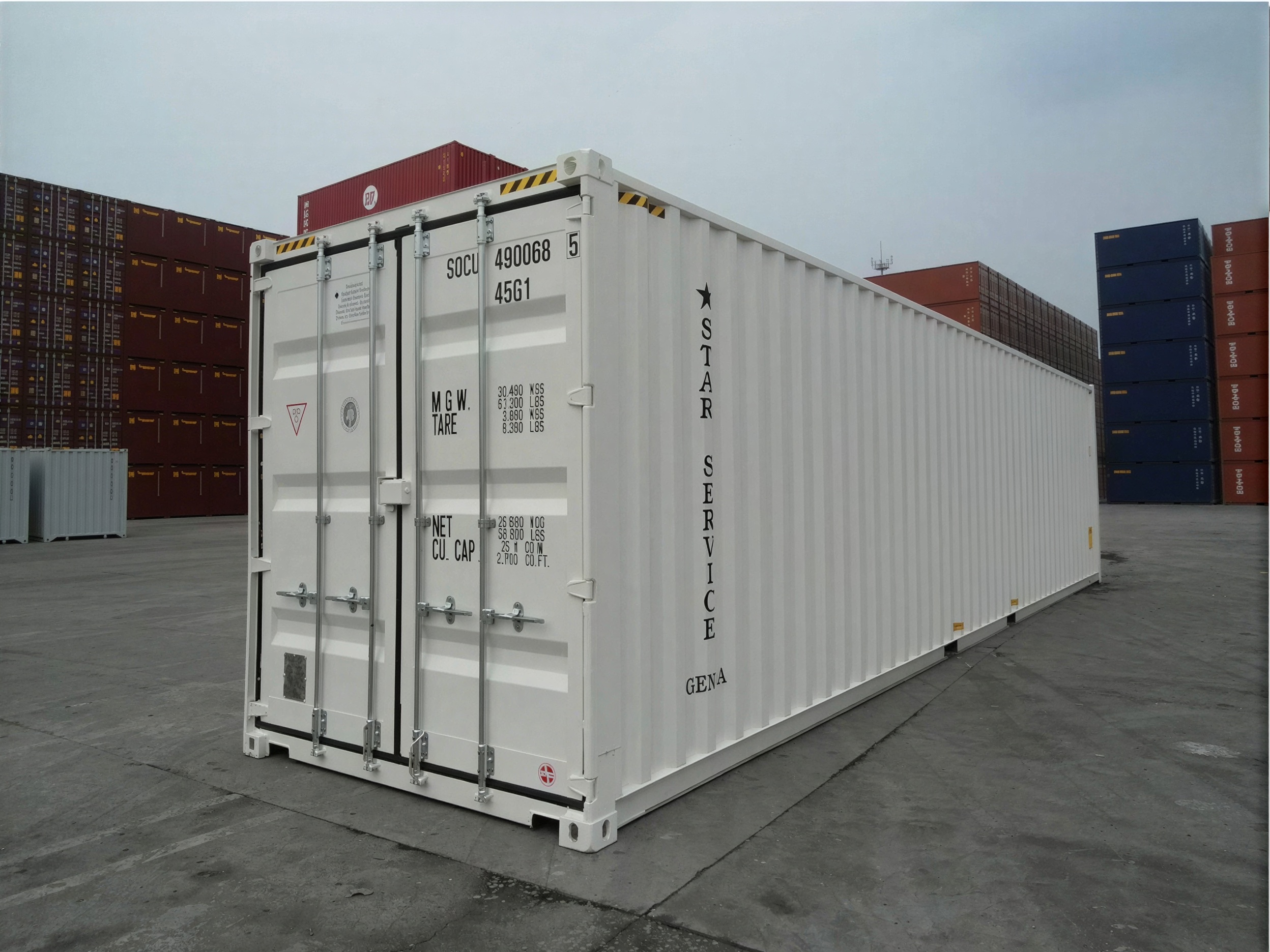
Buying a shipping container is one of those purchases where the vocabulary does most of the damage. Two listings can both say “40ft used container” and differ by $2,000 in price and ten years in remaining life. This guide walks through the five decisions that actually determine what you pay and what shows up on your property.
1. Pick the right size
Ninety percent of buyers land on a 20ft or a 40ft unit. The 20ft fits on a standard driveway and holds roughly the contents of a two-bedroom home. The 40ft costs less per square foot but needs about 100 feet of straight approach for the truck to place it.
High-cube units add a foot of interior height. That extra foot matters more than people expect — it is the difference between stacking pallets two high or three, and it is what makes a container usable as a workshop.
| Size | Interior | Best for | Space needed |
|---|---|---|---|
| 20ft | 19'4" × 7'8" × 7'10" | Home & site storage | 60 ft approach |
| 40ft | 39'5" × 7'8" × 7'10" | Bulk & equipment | 100 ft approach |
| 40ft HC | 39'5" × 7'8" × 8'10" | Workshops, tall loads | 100 ft approach |
2. Understand container grades
Grade is the single biggest driver of price after size. These are the terms you will see on any reputable listing:
- One-trip: manufactured within the last few years and shipped once. Near-new paint, tight gaskets, no meaningful rust. The premium option.
- Cargo-worthy (CW): certified structurally sound enough to ship goods internationally. Surface rust and dents are normal; the box is sound.
- Wind & watertight (WWT): no longer certified for shipping but dry inside. The value pick for static storage — and what most buyers should be looking at.
- As-is: sold without any watertight guarantee. Only worth it if you are cutting it up for a modification project.
3. What containers cost in 2026
Prices moved a lot between 2021 and 2024 and have since settled. As of this year, in the Columbus market, expect roughly:
Delivery is quoted separately — typically $300–900 depending on distance and whether we need a tilt-bed or a crane. Always confirm whether a listed price includes drop-off, because many online listings do not.
4. Delivery access and site prep
This is where most first-time deliveries go wrong. A tilt-bed truck sets the container by sliding it off the back, which means it needs a straight, firm run-up roughly twice the container's length, plus about 14 feet of vertical clearance for the bed to raise.
Prepare the pad before we arrive: level ground, gravel or railroad ties at the four corners, and no soft soil. A container that settles unevenly will not close properly — the doors are the first thing to bind.
5. Permits in Ohio
Rules vary by municipality. In much of Franklin County a container used as temporary storage on a residential lot is fine for a limited window, while permanent placement or any commercial use generally needs a zoning review. Homeowners associations often have their own restrictions that are stricter than the city's.
Call your local zoning office before you buy. It is a ten-minute phone call that occasionally saves a very expensive relocation.
The short version
Choose the size by your access, not just your storage needs. Buy wind & watertight unless the box needs to ship again. Budget for delivery separately, prep a level pad, and make one call to zoning. Do those five things and a container is one of the most durable purchases you will make.